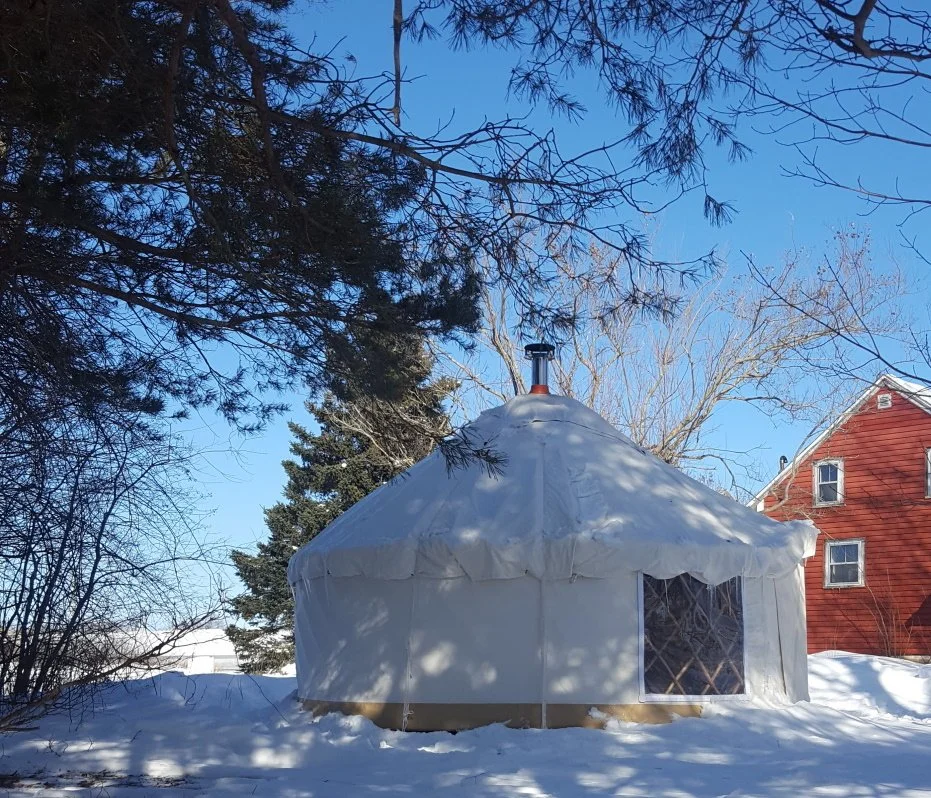
Some years ago (decades ago, actually), we had a significant snowfall that affected most of the province of Nova Scotia. Deep snow and power outages were widespread. Friends of mine and my husband were returning from a yurt building workshop and they couldn’t make it safely to their place, but they could make it to our farm. They asked us if the workshop hosts, who were new to the area, could come and stay with us as well.
As I recall, we had quite a few people with us for several adventurous days of winter storm survival. That was the first time I had heard of a yurt. My friends, who had attended the workshop, were enthusiastic about the yurt structure and with Alex and Selene. Over the next many years, I got to know Alex and Selene and spent time in their yurts with different groups of people at different events. I was charmed and endeared by the structure. I was always yurt-curious, but it was never the right time to learn more about yurts.
Years later, I wanted a weekend getaway. When I started to think about what kind of a getaway would suit me, I saw an advertisement for a Little Foot Yurt workshop coming up soon. The timing was perfect. I really enjoyed the workshop and was happy to learn how to get started with building a yurt (finally!). I was especially excited at how accessible it all was. None of the skills are terribly difficult, none of the tools are hard to learn. I set out to gather everything that I was going to need to get started and as I sourced and purchased these items, I started to consider how to source the actual trees/wood that I was going to need for poles.
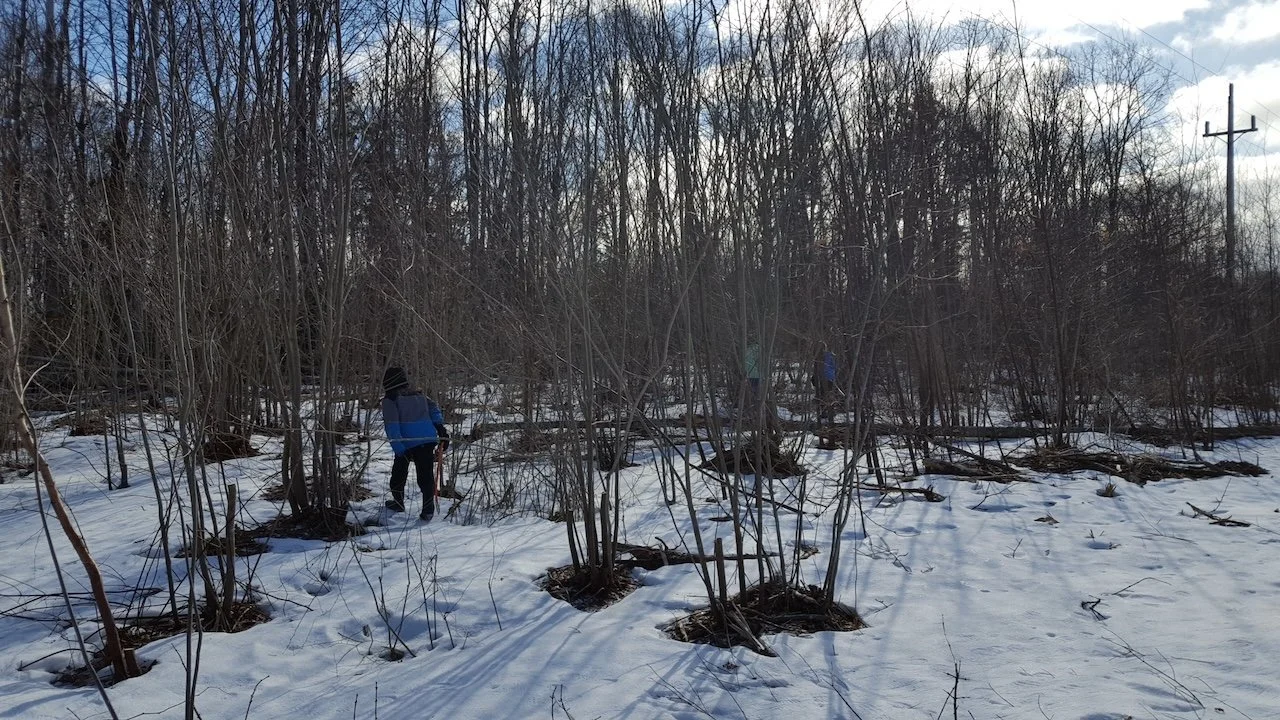
Shortly after the workshop, my husband asked me to come with him to look at some of his parent’s land, adjacent to our farm. A power line runs through the farm and in this wooded area, the power company was ready to clear the re-growth. I got out of my truck and my jaw dropped. I couldn’t believe that I had access to a piece of land that was coppiced and full of ready to harvest maple yurt poles.
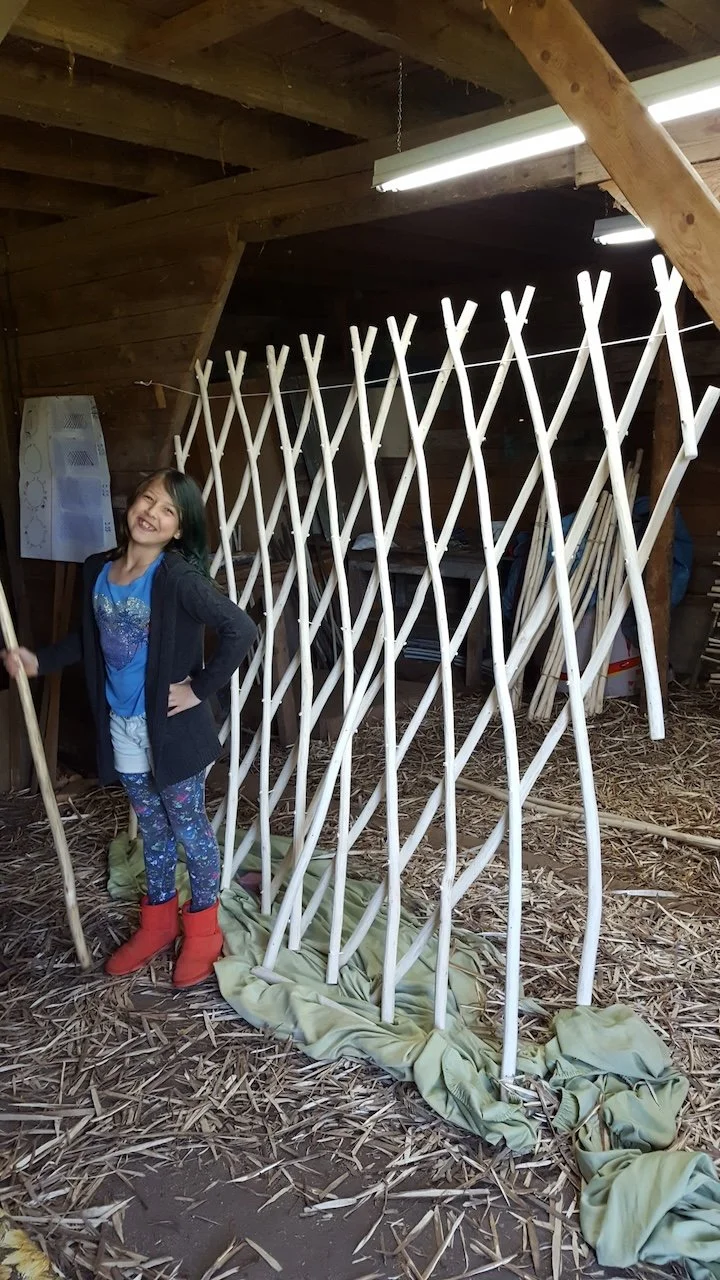
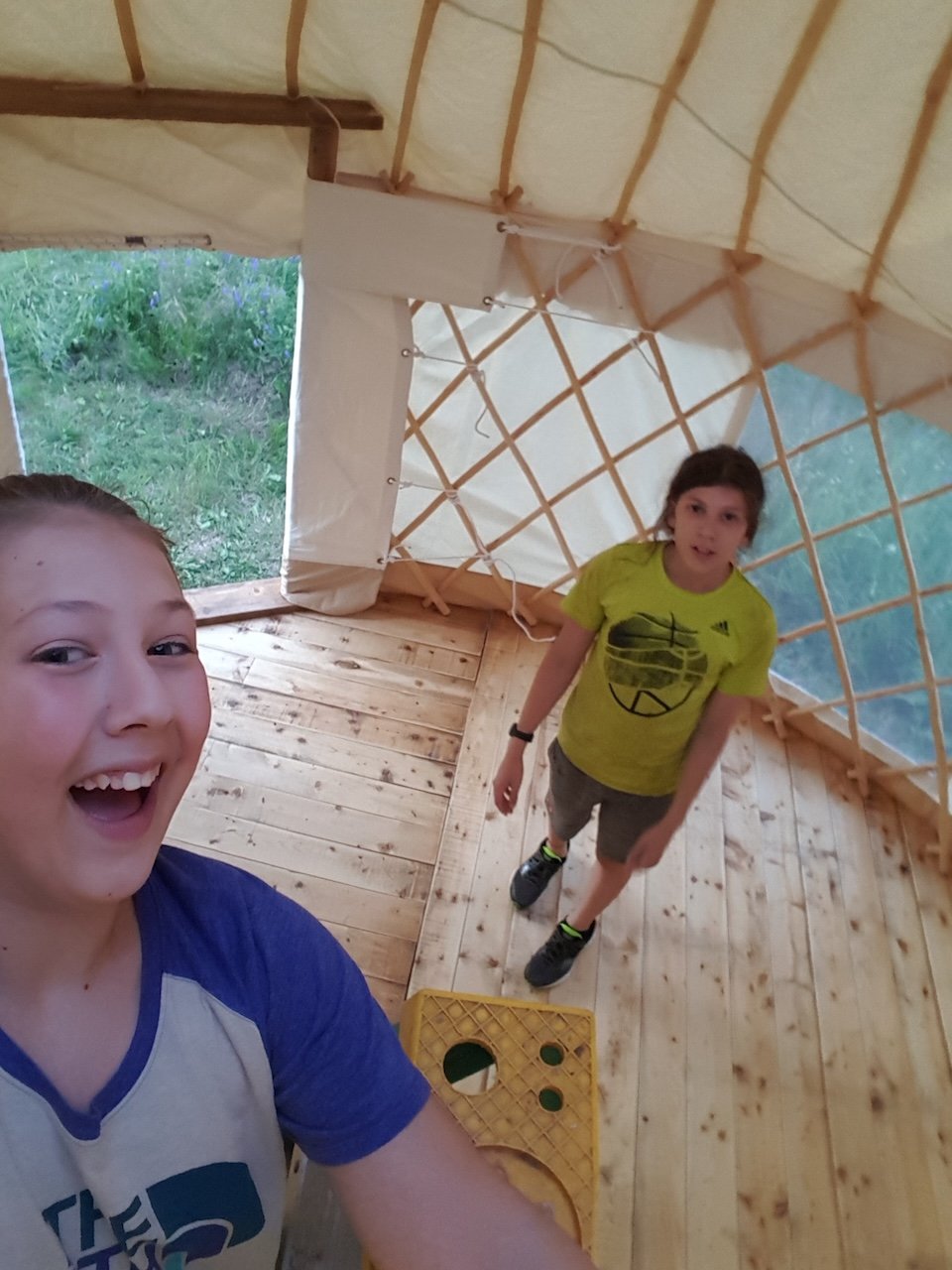
Another workshop participant I had met agreed to come and help me harvest, which was a huge help. For the next few months I would take my kids on outings to collect wood. It was hard to do as much harvesting as I would have liked, and with Gabby there to harvest poles for herself and for me, it made it possible for us to collect enough poles for her 12 foot yurt and my 17 foot yurt. We even went back in with my child’s grade 7 classmates to collect enough poles for the class to make a 15 foot yurt. My oldest used our scraps to make her own 8 foot yurt.
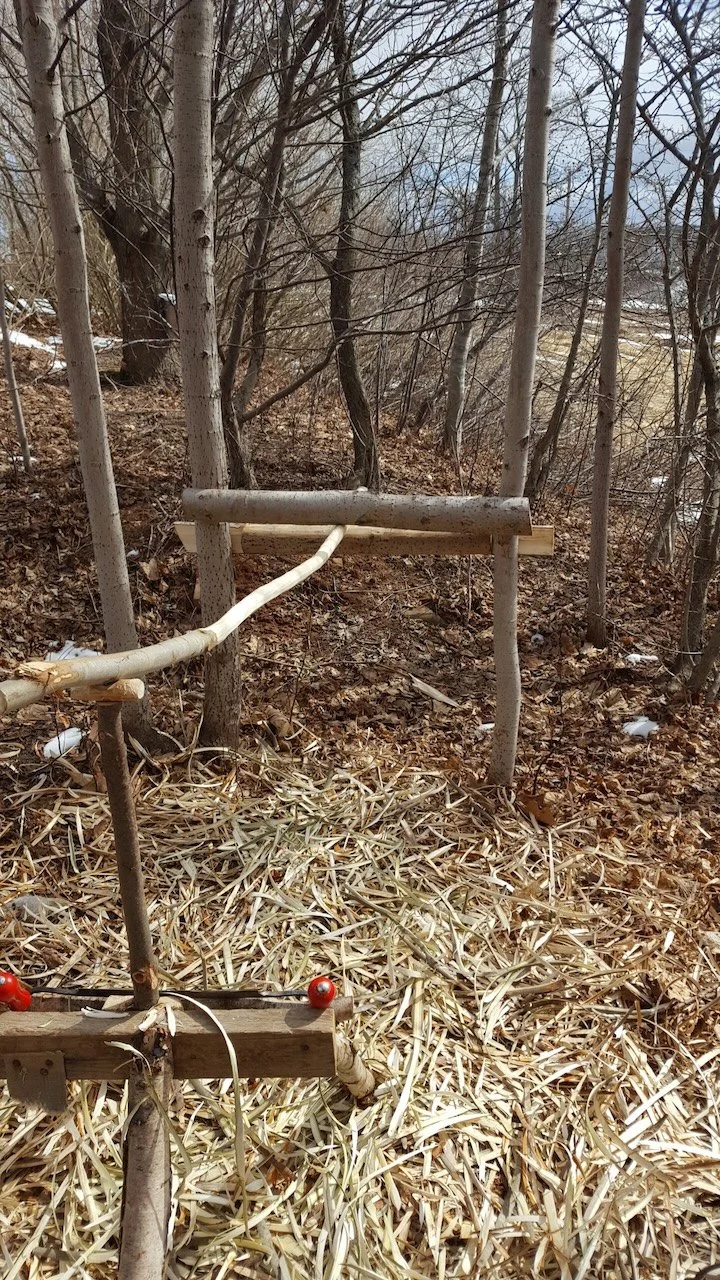
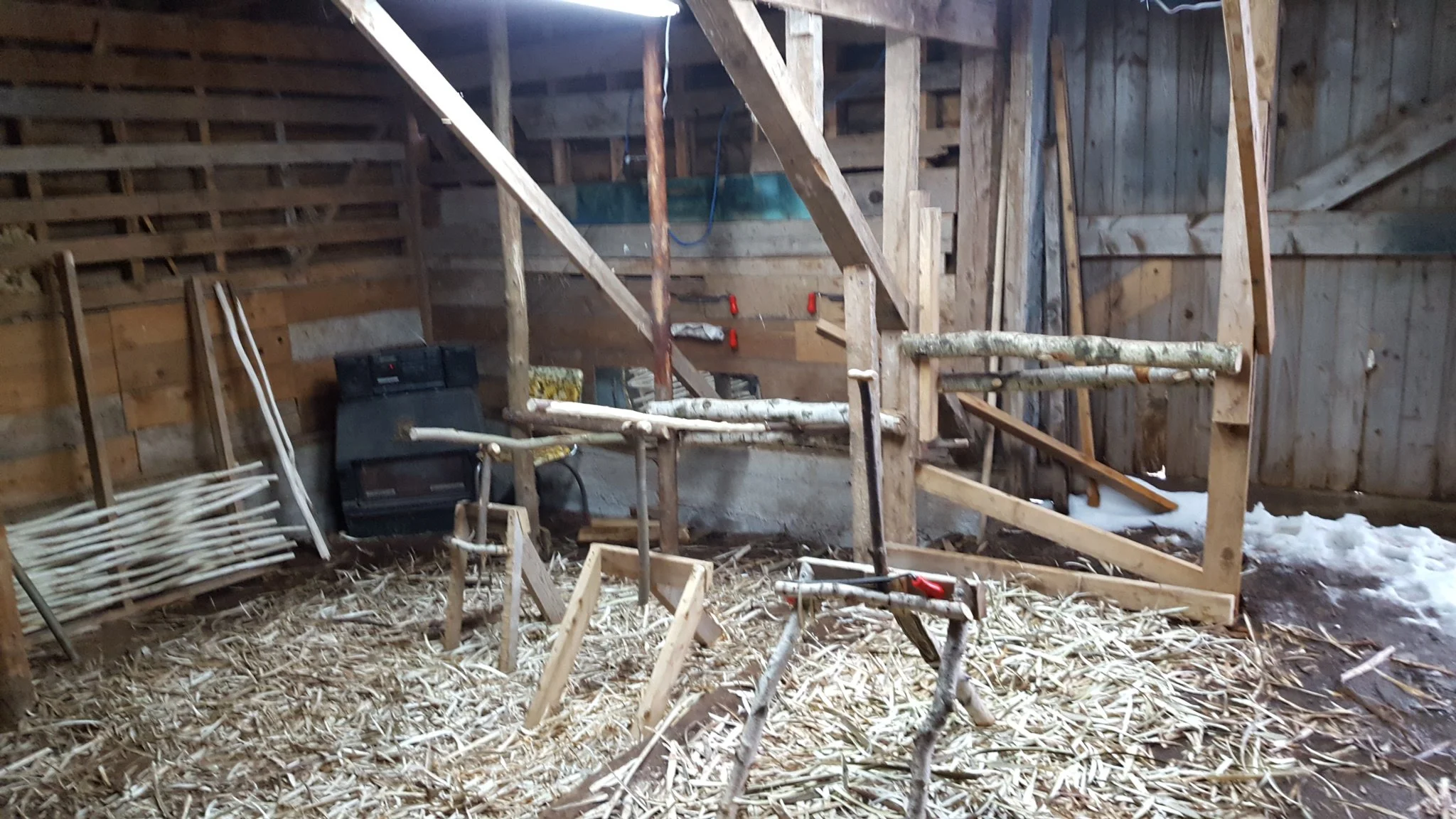
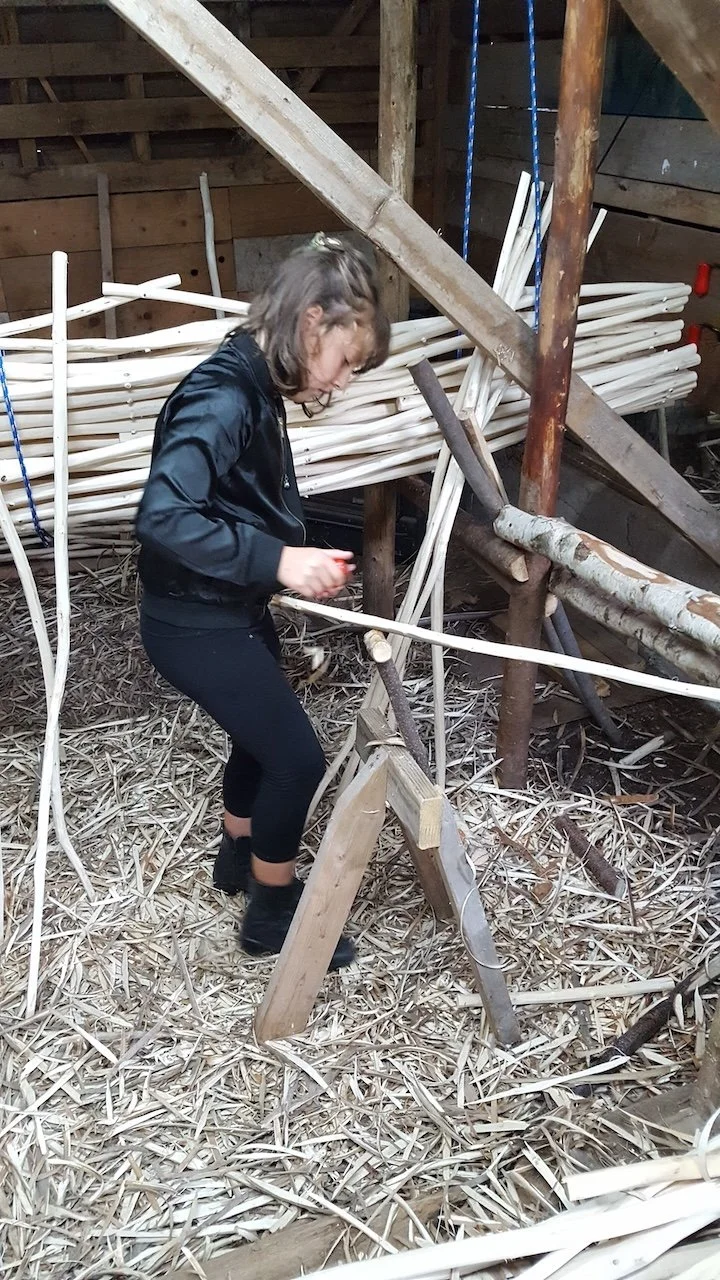
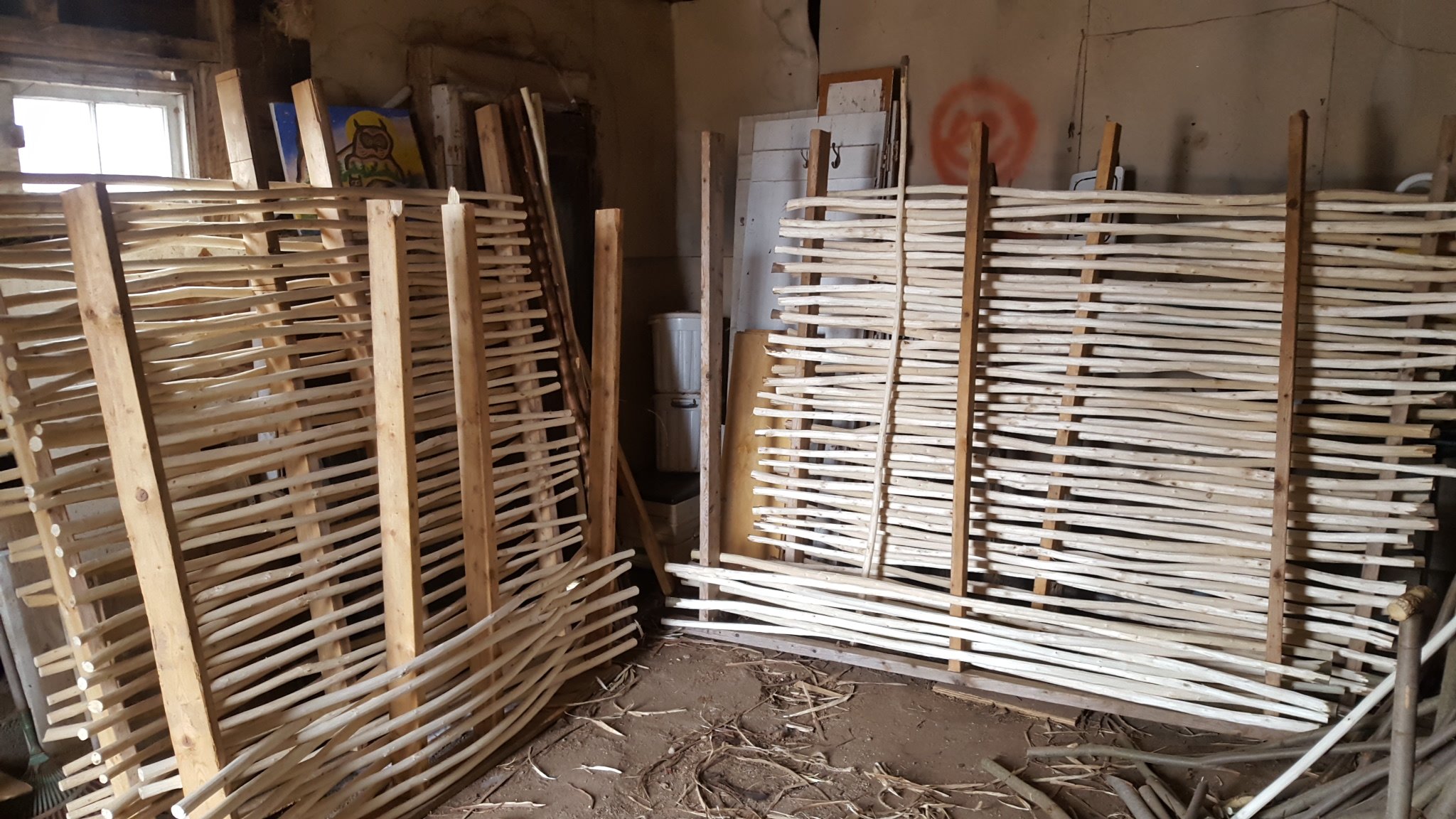
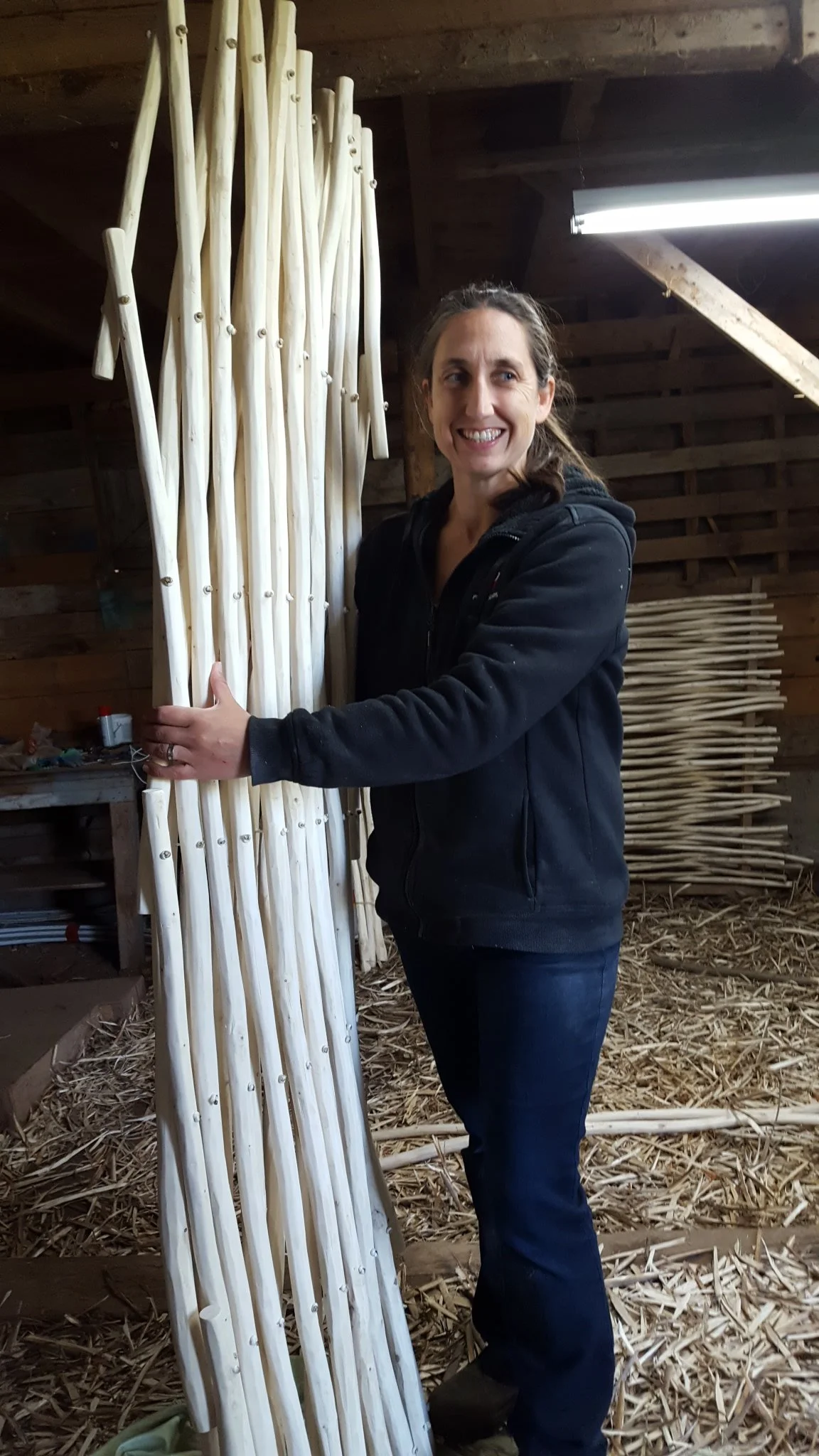
We binge harvested at every opportunity. We bundled the poles and brought them back to the farm and stored them outside a building, but under cover (mostly). Once we had collected all the poles we needed, we started strimming. In order to keep my kids involved, I had to purchase extra draw knives so everyone could participate. We built 2 outdoor strimming stations and 3 strimming stations in my shed/garage (no heat, but with electricity). For a while it seemed like all I did was buy more tools and build more strimming stations.
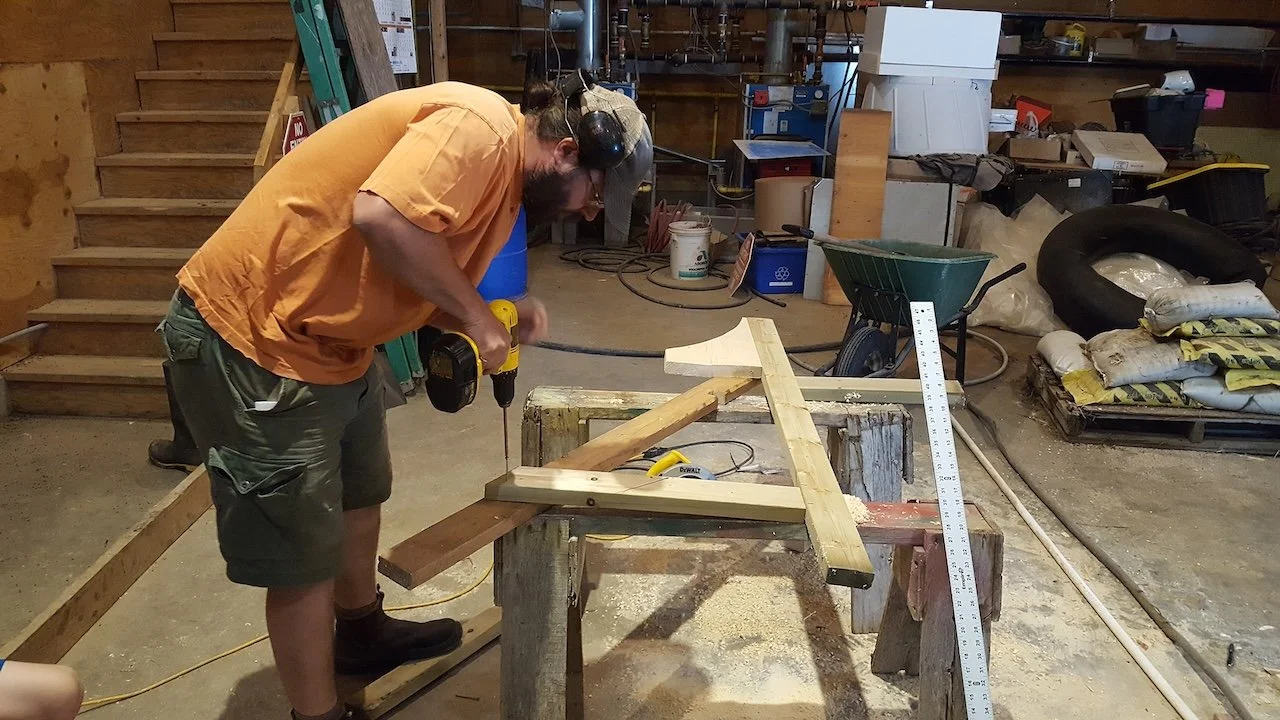
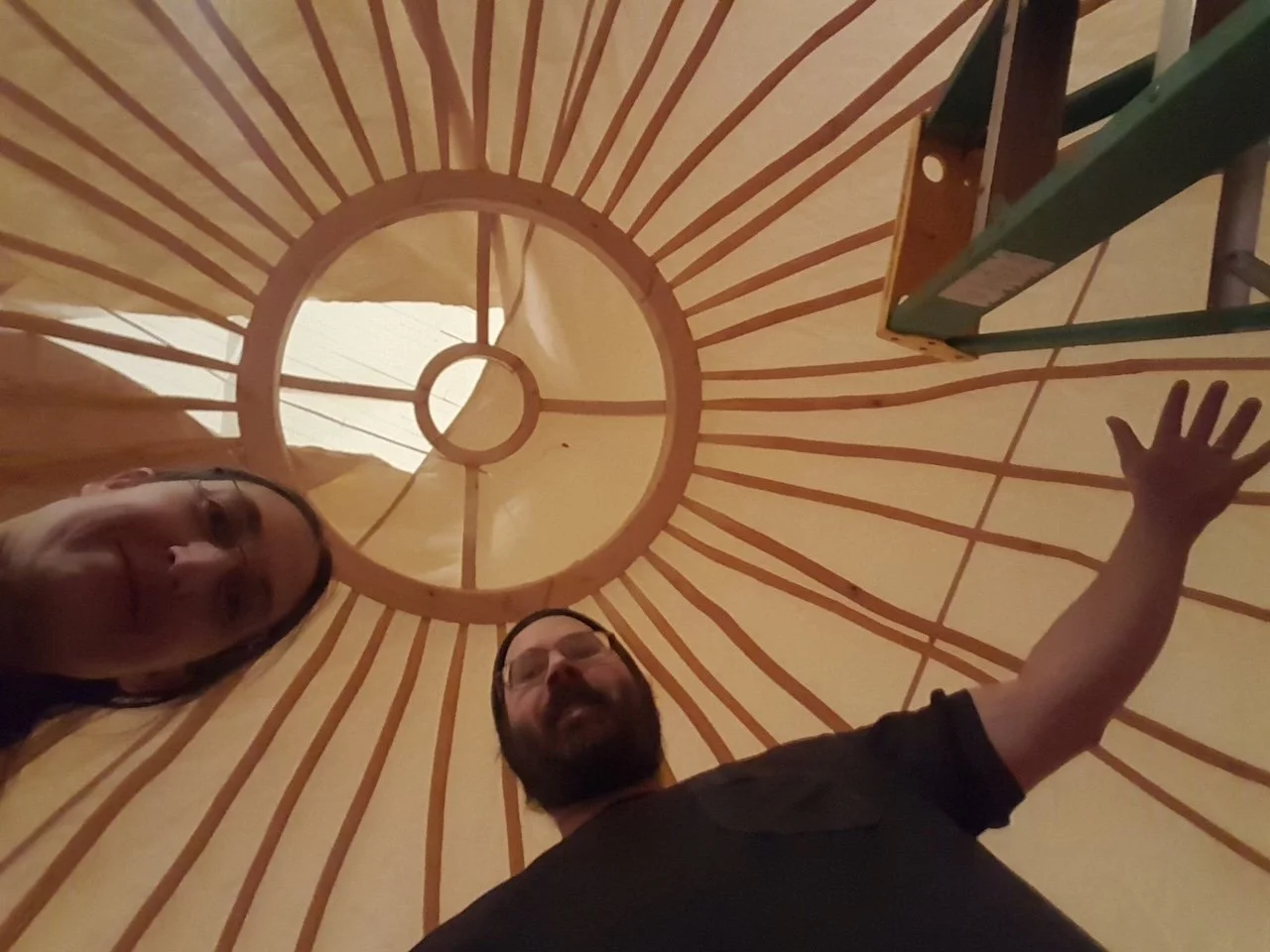
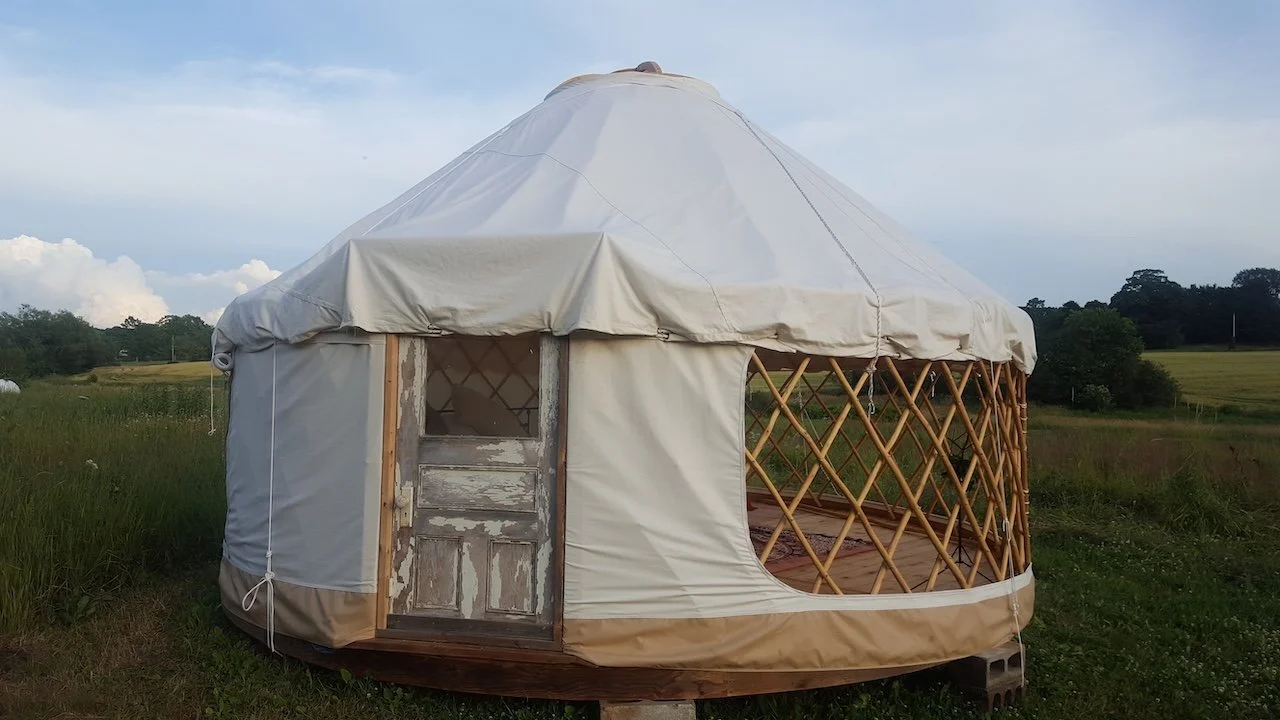
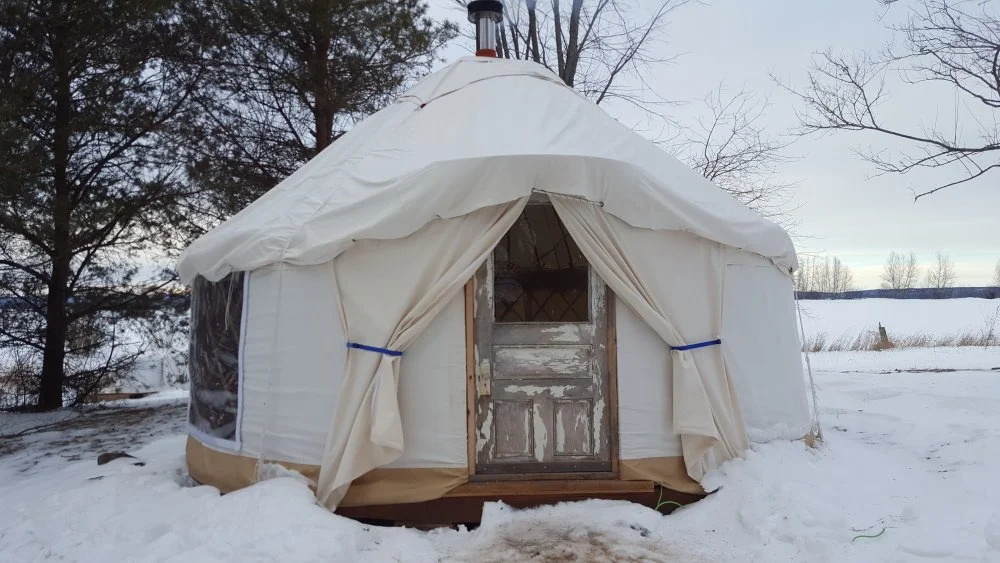
The next winter I worked on building my wheel, preparing the roof poles and building the door frame. My husband is quite competent with tools and was a huge help to me. He helped design and build a stand to hold my wheel at the correct angle so I could drill holes for the roof poles. He also helped modify an old farmhouse door to fit the yurt. He helped me with my yurt math and he encouraged me when I made mistakes.
Almost everything I did to work on the yurt was done in 30-minute or 60-minute time chunks. If I could find an hour a day to strim poles, that was great, but 15 minutes was enough time to do at least one pole. When I was drilling holes in my wheel, I would do three or four holes per day. It was a very slow process, and I always wanted to do more and be further along. It was a daily lesson in being content and present.
Once the frame was complete, it was time to think about the canvas. Selene had provided a lot of information about how to sew a cover, and she was patient with me when I asked a million questions a million times.
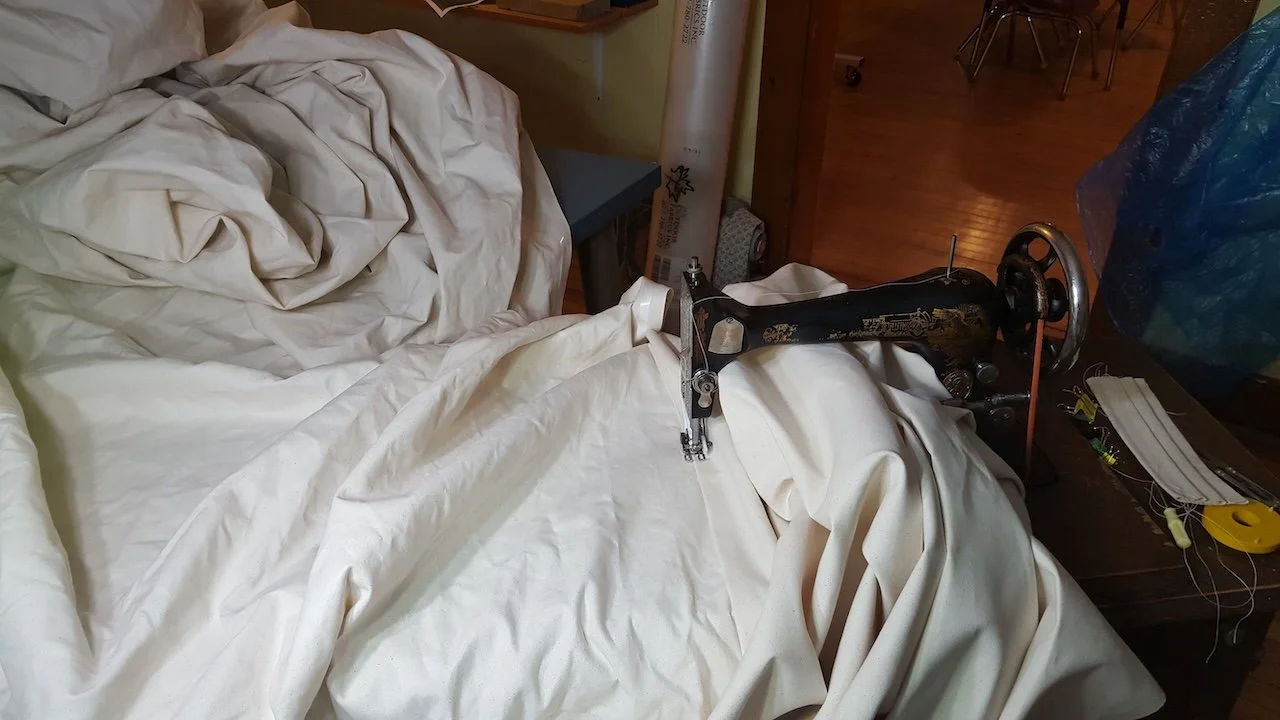
At some point during the yurt building process my grandmother passed away and I acquired her antique singer treadle sewing machine. At first, I investigated ways to motorize it, thinking that it would be easier or better if it had a motor. Through my investigation I came across a comment from someone who said, ‘you can attach a motor to a treadle sewing machine, but why would you want to ruin it? As I got more familiar with the sewing machine, I came to agree with this sentiment. A treadle sewing machine can easily sew through up to 8 layers of canvas and the treadle requires hardly any physical energy. I was very pleased with the sewing machine, but it did require careful attention to the bunching of fabric and managing the canvas placement before and after it went through the machine.
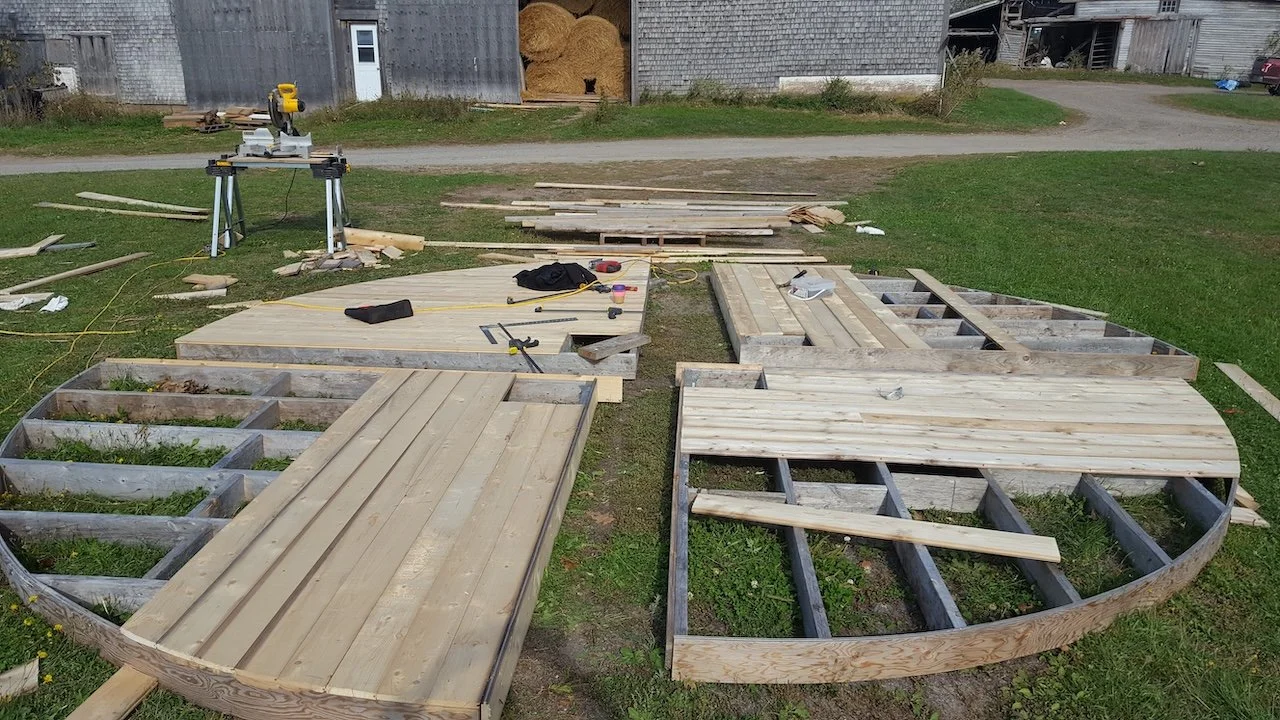
I shed many tears while making the yurt. There isn’t a part of the yurt that I did correctly the first time. I sewed seams the wrong way and had to seam rip long sections of work. I cut fabric to the wrong length. I used the wrong math on my wheel and drilled and chiseled all of the holes incorrectly and had to do the entire thing again. I left my freshly strimmed wall and roof poles to dry in an area that got snow drifted and then mold grew on the poles and I spent a huge amount of time cleaning them. Twice. I had someone build me a four-piece platform and the tarp I placed over the pieces was no match for the winter and it became badly weathered and so I rented a sander and refinished the entire base (expensive and time consuming).
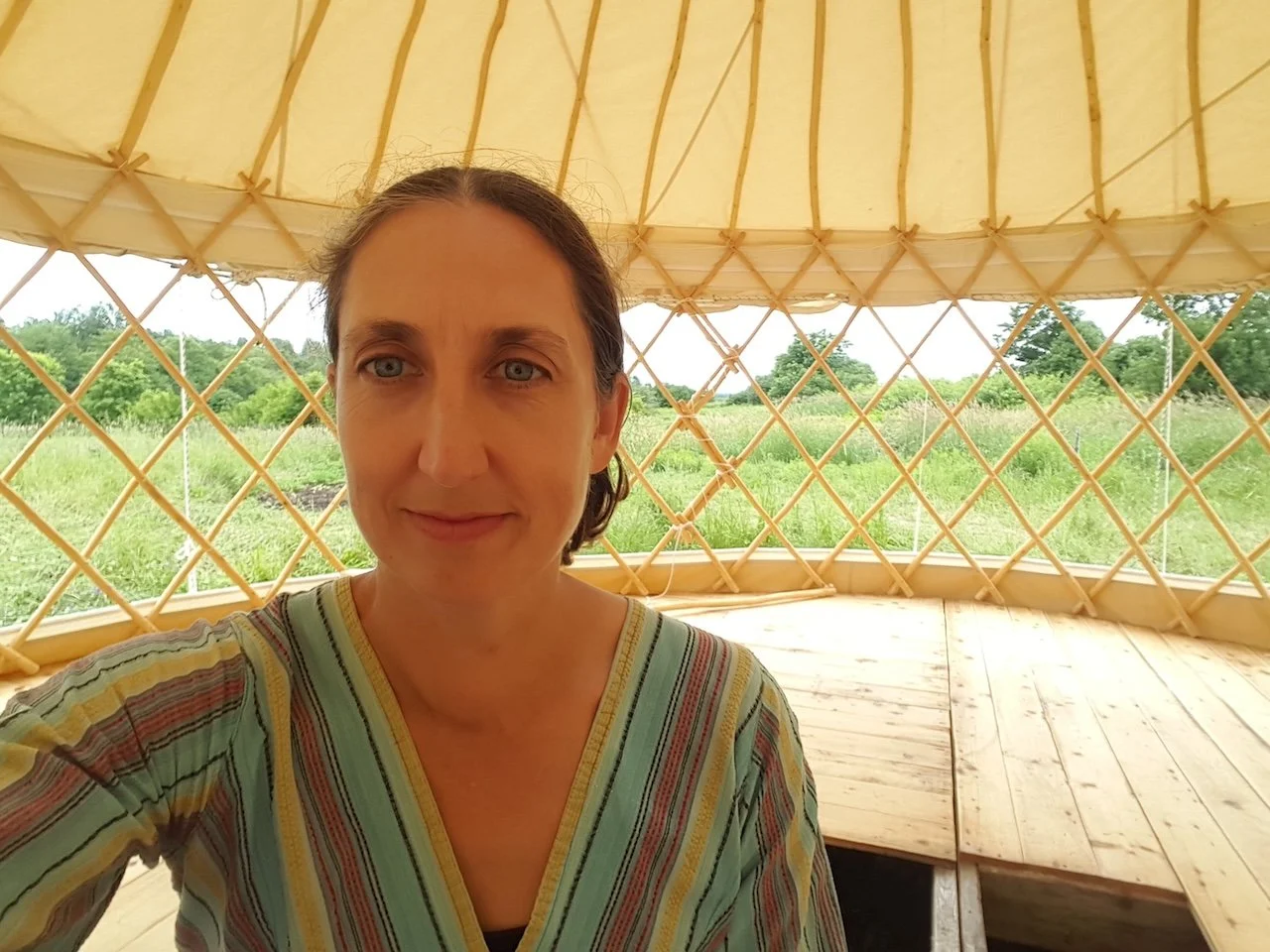
Despite all the errors, everything turned out okay and nobody looking at the yurt notices my mistakes. Building and having a yurt has given me lots of opportunity to reflect on who I am, what I want, and why I do the things I do. Every mistake has given me a chance to be okay with my imperfections. No matter how much work it has been, it always feels worth it when I am sitting in my yurt.
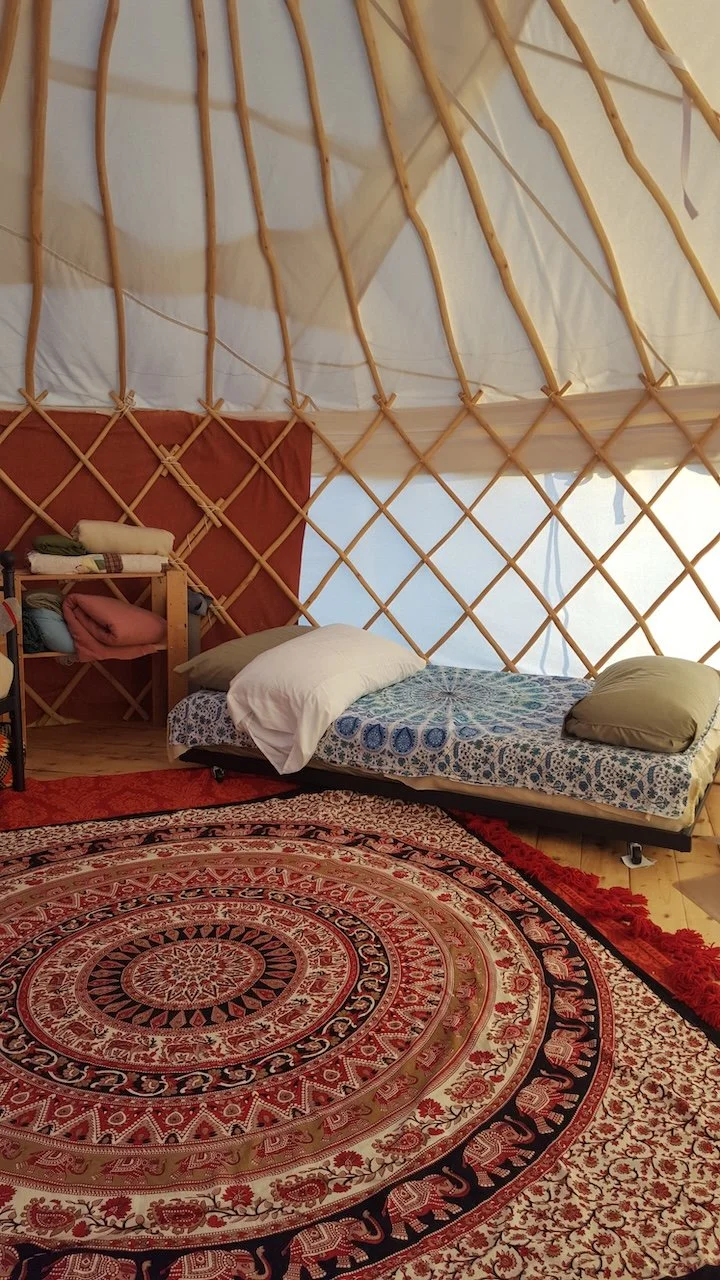
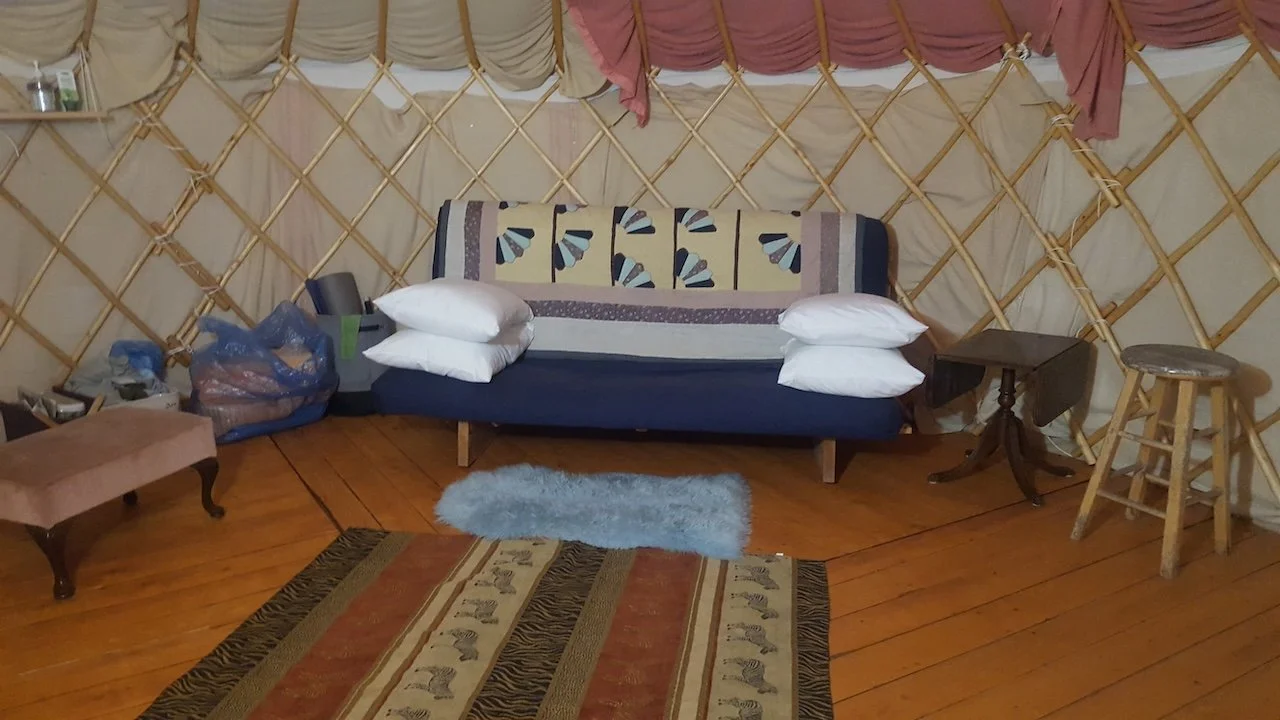
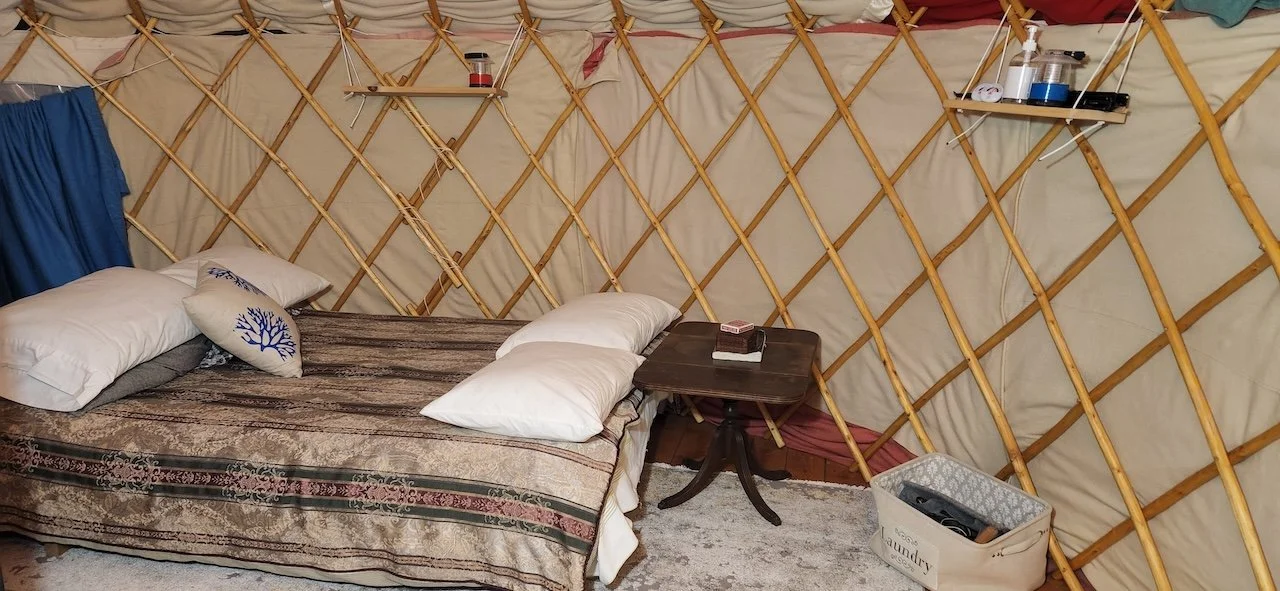
The space is magical. It inspires reflection and wonder. Conversations are deep and meaningful. I have a wood stove in the centre of my yurt and once the space is warmed up it is really hard to leave. It is a wonderful place to read, work, yoga, nap or relax. I can sit in my yurt for hours marveling at the ancient design and the fact that I built it.
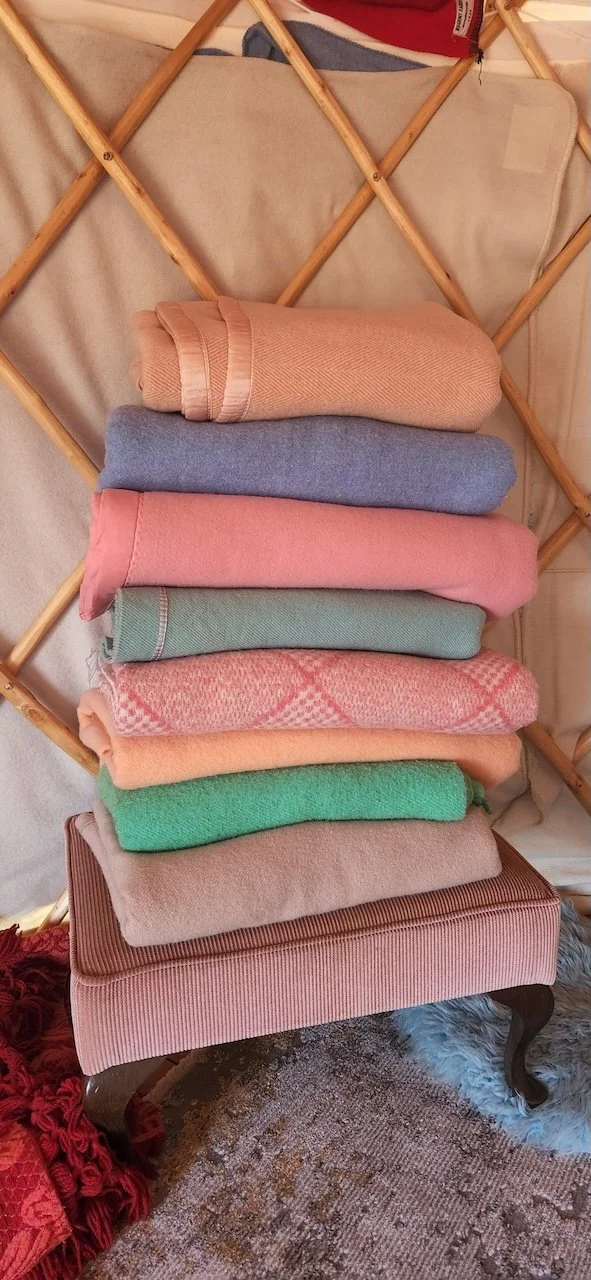
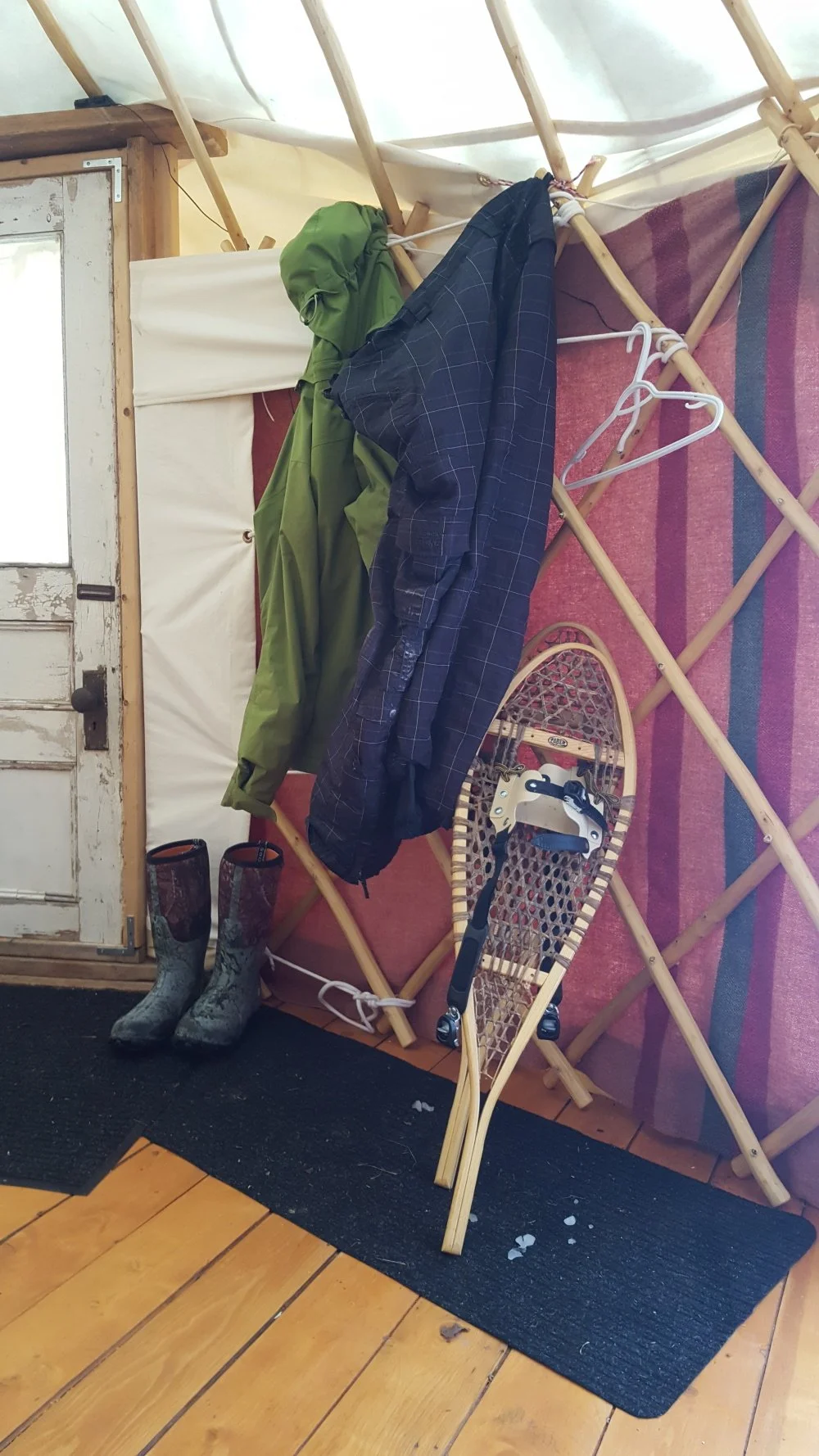
I insulated the walls and roof with wool blankets that I purchased from second hand shops. Finding wool blankets for sale was a fun side project that lasted several years. Anytime I drove past our local thrift store, if I had a few minutes to spare, I’d run in and take a look. I usually found a wool blanket once every 3 or 4 visits. Most of the wall blankets have been stitched into panels that are three blankets deep with webbing and rope at the tops so that they hang on the wall frame and don’t slide out of place in the wind.
I am grateful that I learned how to build a yurt and I am happy to have one to enjoy and share with family and friends. It is a truly incredible structure that is inspiring to be in and I am proud to have built it myself. Except, as I mentioned, I didn’t do it alone. Thank you especially to Selene and Alex for the instructions, encouragement and ongoing support!